Joan Gilling
The Bell JarJoan Gilling’s return at the asylum turns Esther Greenwood’s private crisis into a disturbing encounter with a life that runs beside her own. Joan is neither simply a friend nor merely an enemy: Esther has known her at a distance, resents her, studies her, and recognizes in her a warped likeness. Joan’s suicide, reported near the novel’s end, gives that resemblance its most devastating consequence without making the two women interchangeable.
Identity and Reappearance
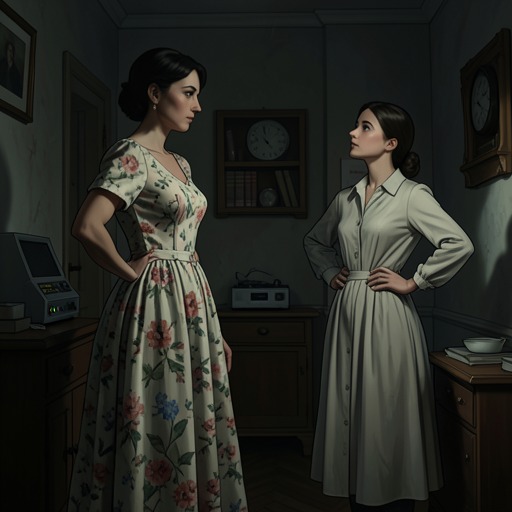
Joan first appears in Esther’s asylum life as a familiar face in an unfamiliar setting. When Esther opens the neighboring room’s door, the girl in jodhpurs greets her with a broad smile and says she has been told Esther is there. Esther’s tentative recognition becomes confused disbelief when the visitor identifies herself as Joan. The greeting carries the strange ease of an old acquaintance, although Esther recalls that she had never known Joan except at a cool distance.
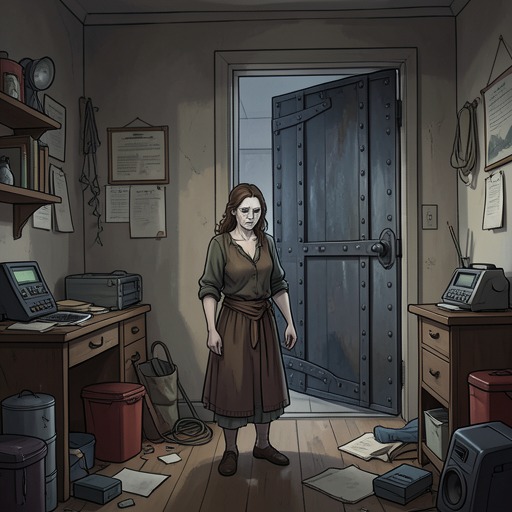
The room sharpens the encounter into an image of doubling. Joan’s closet, bureau, table, chair, and white blanket marked with a large blue C mirror Esther’s own room. For a moment Esther suspects that Joan has taken a room in the asylum as a joke after hearing where Esther was, and imagines that this would explain why Joan told the nurse she was Esther’s friend. The physical likeness of their rooms makes their proximity feel less like ordinary companionship than a repetition Esther cannot quite explain.
Arrival and Shared Crisis
Joan tells Esther that she read about her. She had not learned how Esther was found, but had read about the events leading up to that point. Gathering all her money, she took the first plane to New York. When Esther asks why she chose New York, Joan says she thought it would be easier to kill herself there. Her explanation gives the reunion a grim context: Joan has not come merely to visit an acquaintance but has arrived amid her own suicidal crisis.
The account also makes Joan’s interest in Esther double-edged. She has followed Esther’s story through what she read, then sought her out in the place where Esther is receiving care. Their histories have become linked in Joan’s understanding, but Esther’s memory of a cool, distant relationship resists the idea that they were close. The asylum brings them into daily proximity without erasing that distance or resolving what Joan’s attention means to Esther.
The Double and Its Limits
Esther describes Joan as fascinating despite her own ingrained dislike and the creepy feeling Joan provokes. She compares watching her to observing a Martian or a particularly warty toad, emphasizing how alien Joan seems. Yet the alienness is also the point of recognition: Joan’s thoughts are not Esther’s, and her feelings are not Esther’s, but they seem close enough to form a wry, black image of Esther’s own.
Esther sometimes wonders whether she made Joan up. At other times, she imagines that Joan will continue to appear at the crises of her life, reminding her of what she has been and what she has gone through, while undergoing a separate but similar crisis of her own. This uncertainty makes Joan more than a straightforward counterpart. She remains an independent person whose experiences are not reducible to Esther’s, even as Esther reads her as a reflection of her own past and present.
Death and Narrative Significance
The parallel ends in a real loss, not a symbolic reconciliation. Doctor Quinn tells Esther that Joan has been found; when Esther asks whether she is dead, the doctor confirms that Joan has hanged herself. The report comes in the passive language of discovery before the fact is stated plainly, and Esther’s blood slows at Doctor Quinn’s wording. Joan’s death confirms the seriousness of the crisis that brought her into Esther’s orbit and abruptly closes the possibility of their relationship developing further.
Joan’s role depends on the tension between likeness and difference. Esther can see her as a black reflection and even wonder whether she has invented her, but Joan has her own history, decisions, and fatal outcome. Her recurring presence gives Esther a way to encounter a neighboring version of her own crisis; her death insists that resemblance does not guarantee the same fate. The novel leaves Esther to face the loss of this unsettling double without suggesting that Joan’s life was simply a lesson or an extension of her own.